
She glowed.
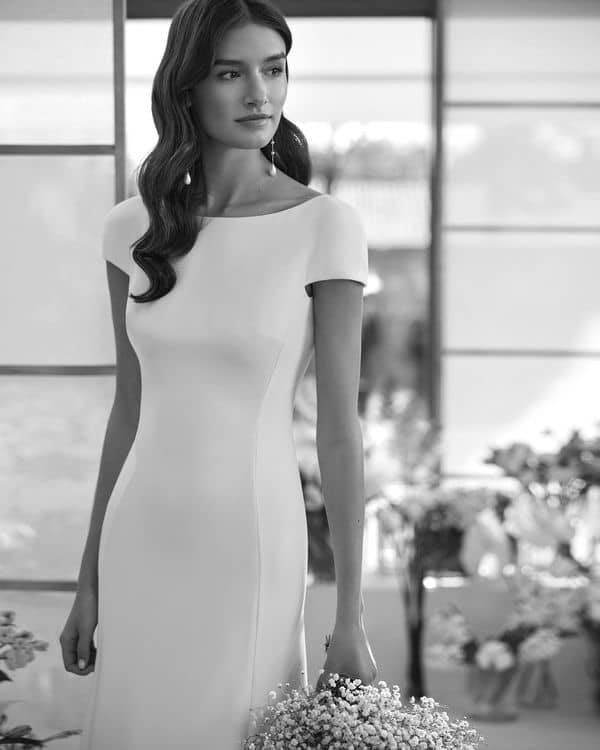
That’s the only word for it. The bride had shopped alone — and honestly, you could tell that was intentional. She had chosen a simple, elegant gown that fit her personality like it was made for her soul, not just her body. No fuss. No drama. Just a beautiful young woman with perfect skin and a face that lit up the moment she put it on.
Then Mom arrived.
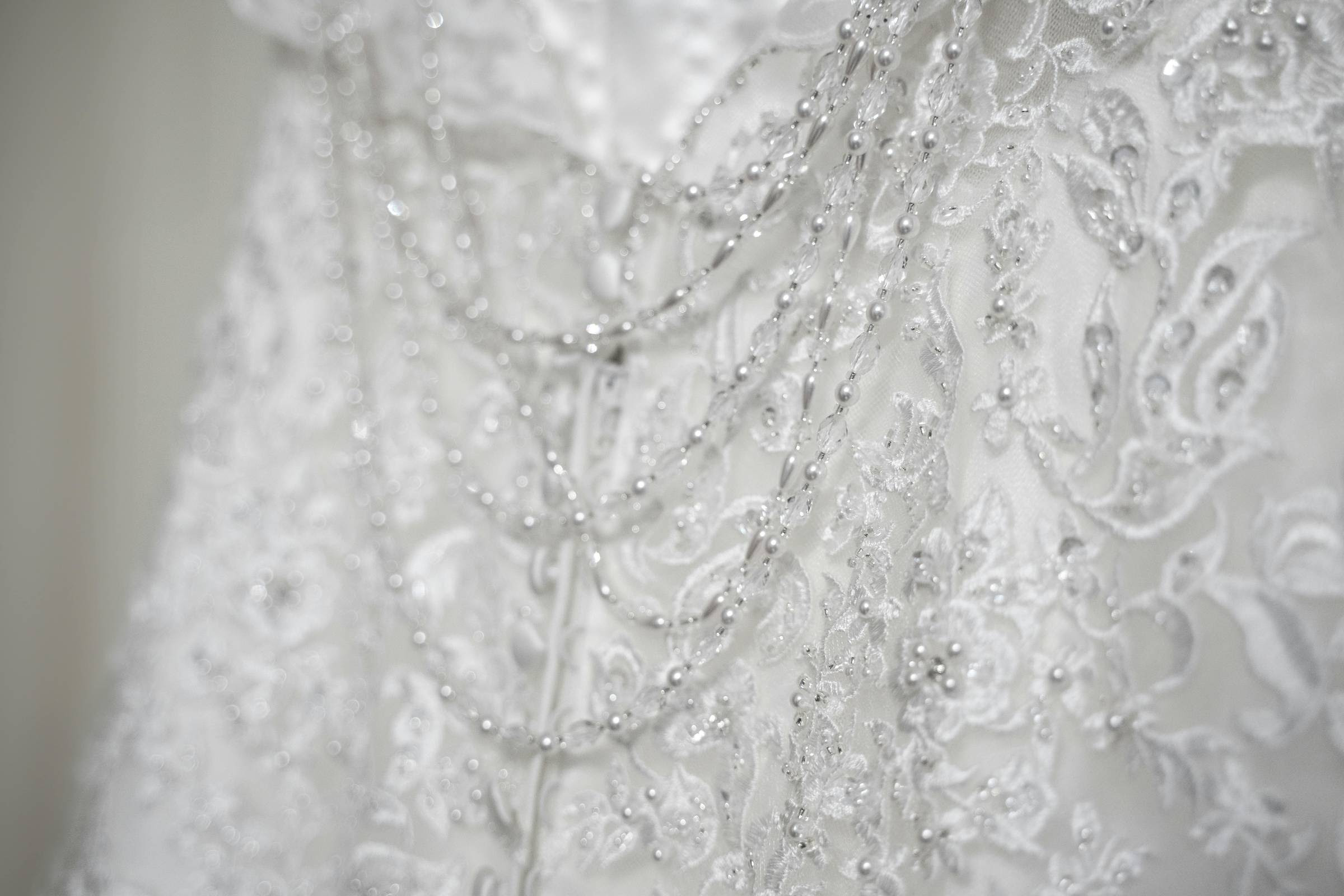
She came with bags. Rhinestone pieces, beaded lace, pearls, more bling than a Vegas showroom.
In her mind, she was helping.
She was contributing. She talked about her own wedding dress — how much she had loved the embellishment, how magical it had felt, how certain she was that her daughter would feel the same way if she could just see it on the dress.
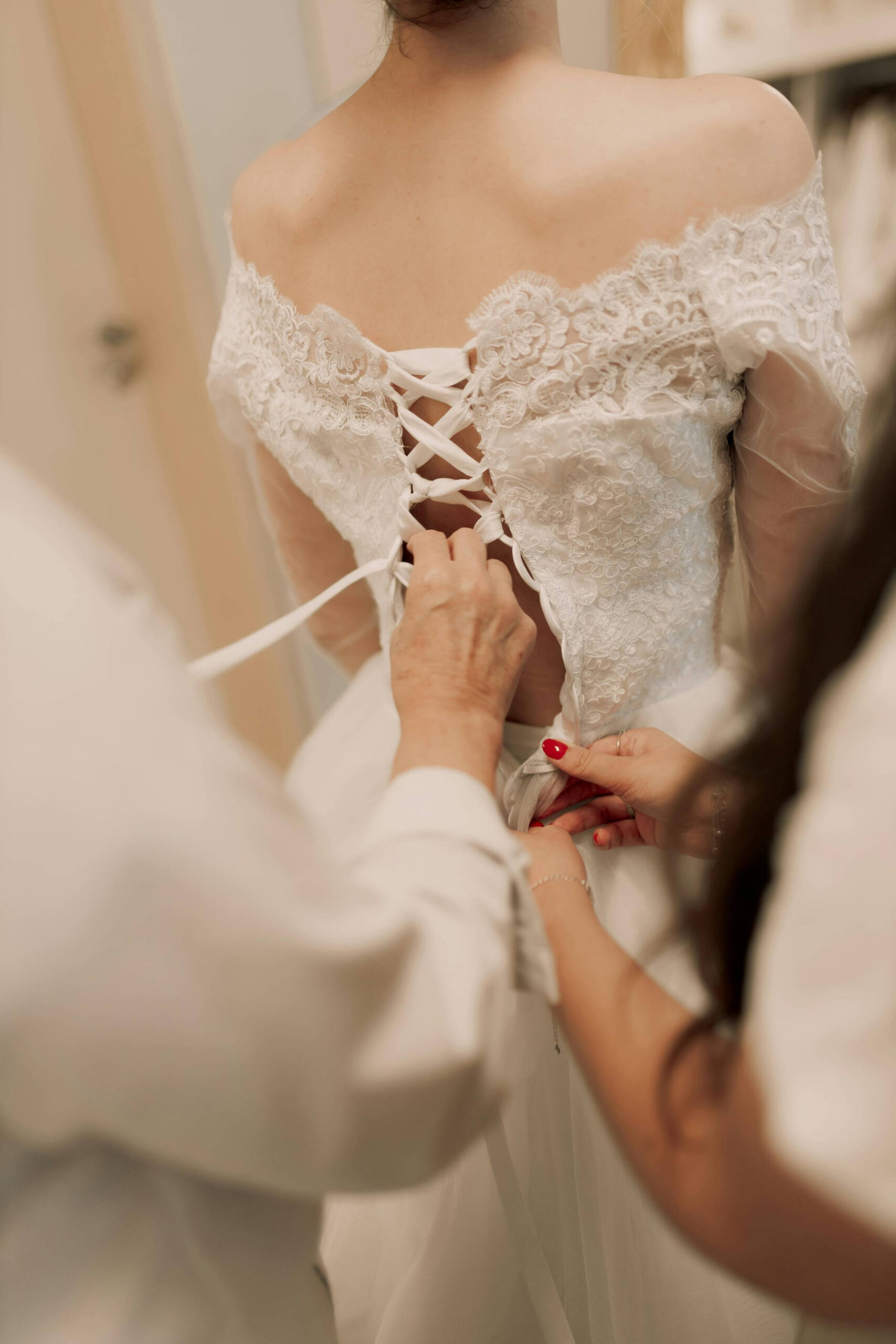
She started draping pieces across the neckline before I could say a word.
I gently warned her that rhinestones can leave dark marks on bridal fabric if you’re not careful. But what I noticed more than anything was the bride. She stood there watching, tears quietly forming in her eyes, saying absolutely nothing. Not a single word.
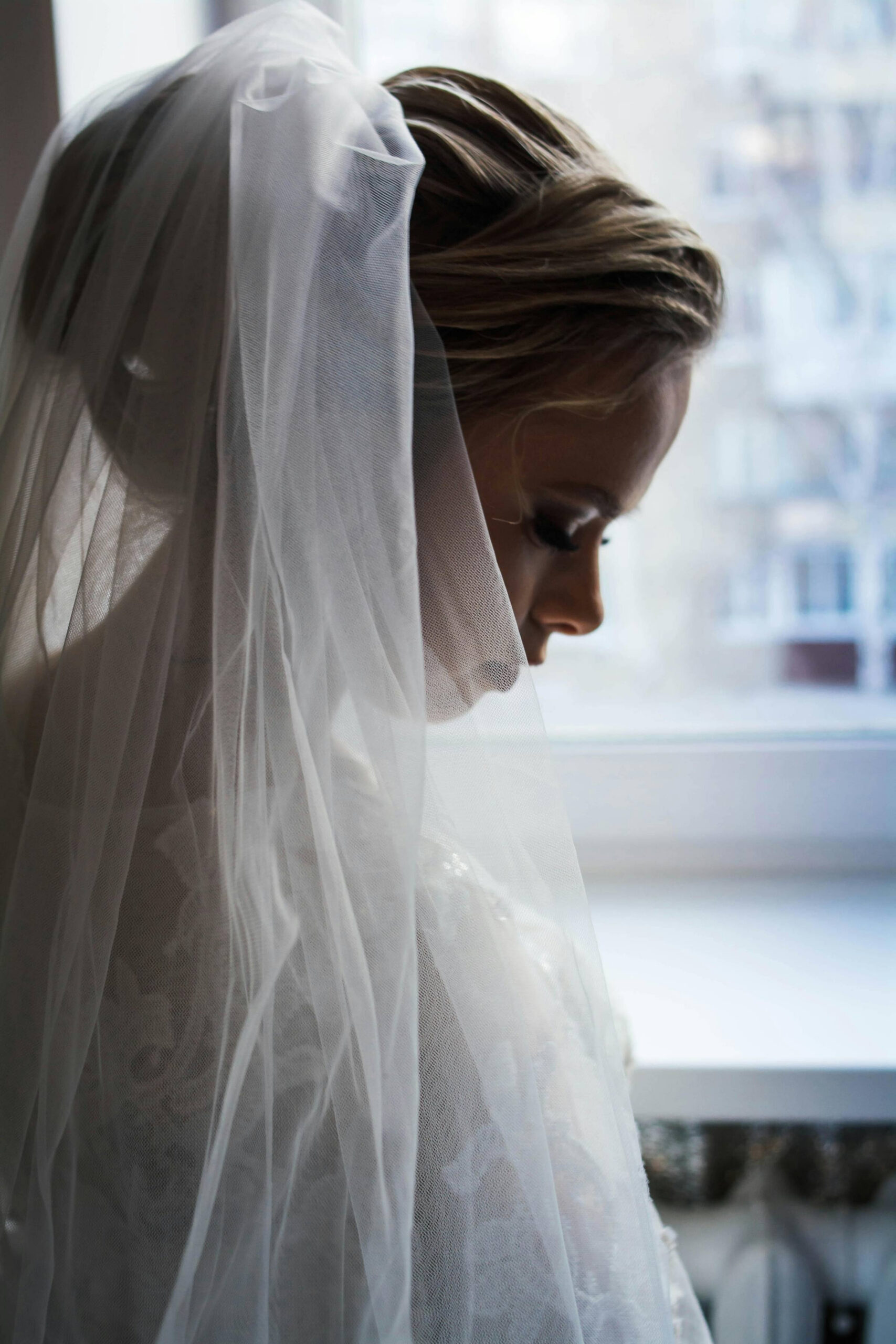
So I carefully removed everything Mom had placed on the gown. And then I started talking — not about the dress, but about her. I complimented how the clean lines and ivory tone showcased her skin. How her posture changed when the embellishment was gone. How she looked poised, radiant, and completely herself.
And then I asked Mom to stop looking at the dress entirely.
“Look at your daughter’s face,” I said. “Really look at her.”
That did the trick.
Momzillas are not villains. That’s the first thing a bridal specialist needs to understand.
In nearly every case, the mother who oversteps is operating from a place of love — love tangled up with nostalgia, expectation, and her own unfinished emotional business. Her daughter’s wedding has triggered something deeply personal in her, and she is projecting it onto the nearest available canvas: the dress.
This is one of the most common and least discussed dynamics in the bridal workroom. The bride has a vision. The mother has a different vision. And the seamstress is standing between them holding a seam ripper and a prayer.
What makes it complicated is that the bride often won’t speak up — especially not to her mother, and especially not in front of a stranger. The power dynamic, the guilt, the desire to keep the peace — it all gets swallowed. And suddenly you, the bridal specialist, are the only adult in the room who can shift the energy without causing a scene.
This is not just an emotional situation. It is a professional one with real consequences.
If you stay silent, you risk altering a dress in a direction the bride never wanted — and she will remember that on her wedding day. If you take sides too bluntly, you risk alienating a family member who may never let the bride forget it either. And if you allow bling to be draped carelessly across delicate fabric, you risk damage that no apology can undo.
The bridal specialist who handles this well earns something that no advertisement can buy: deep, lasting trust. The bride who cried silent tears and said nothing? She will tell that story for the rest of her life — and your name will be in it.
The bridal specialist who handles it poorly will also be remembered. Just differently.
Moments like this are exactly why the Academy spends so much time on the human side of bridal work — not just the technical.
Knowing how to redirect a difficult fitting room dynamic, how to advocate for a bride without creating conflict, and how to use your voice with confidence and warmth — these are professional skills. They are learned skills. And they are just as important as any hand-stitching technique.

Inside the Master of Bridal Alterations Bundle, students learn not only advanced alteration methods, but the kind of professional judgment that only comes from decades of real experience in the bridal industry. One of the things students tell me they value most are the true story videos — real situations, real clients, real solutions. Not textbook scenarios. Actual moments from the workroom, including exactly the kind of fitting room dynamic I described above, and how I navigated them.
And every year at the Bridal Alterations Symposium, we go even deeper. These aren’t lectures about seam allowances. They are rich, honest conversations about the full reality of bridal work — the technical and the human. How to read a room. How to protect your bride. How to handle a Momzilla with grace and professionalism so that everyone leaves feeling good, including Mom.
The best bridal specialists understand that their job goes far beyond the gown.
Love
Dee Dee